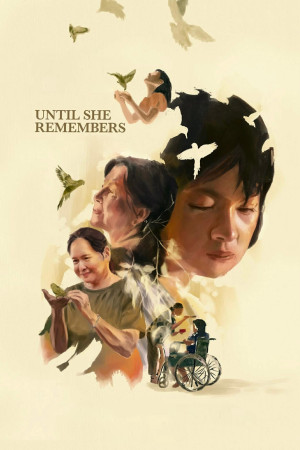
Until She Remembers
Tên khác: Until She Remembers
Xem phim Until She Remembers có phụ đề tiếng việt trên www.xemphim1.top.
Bạn cũng có thể tải xuống miễn phí, đừng quên xem phát
trực tuyến với nhiều chất lượng khác nhau 720P 360P 240P 480P (nếu có) tùy theo đường truyền
của bạn để tiết kiệm dung lượng internet.
Status: trailer
Năm phát hành: 2026
Thời lượng: 107 Phút
Quốc gia:
Philippines
Định dạng: Phim lẻ
Số tập: 1
Đạo diễn:
Brillante MA Mendoza
Diễn viên:
Boots Anson-Roa, Barbie Forteza, Albert Martinez, Angel Aquino, Eric Quizon, Vince Rillon, Perla Bautista, Erlinda Villalobos
Chất lượng:
HD Vietsub
Thông tin phim Until She Remembers
Until She Remembers
The fracture wasn’t glass or bone, something clean you could set. It was the slow, splintering crack of her parents’ marriage—a silence thicker than shouting, a sigh that emptied the house of warmth. Lien, her grades already fraying like the hem of her school uniform, felt the ground shift beneath her. Suddenly, the textbooks mocking her failures, the chatter hallways she no longer belonged in—they were just noise. She needed quiet. She needed space that wasn’t theirs. So when her grandmother’s call came, thick with the scent of ginger and old papers, Lien packed a bag with little more than worn clothes and a cryptic note: "I’m going where the sky feels wide."
The journey to her grandmother’s village was a blur of rattling buses and humid air that tasted like damp earth and diesel. Here, the world measured time in the drip of rain from eaves, the slow unfurling of banana leaves, the ancient creak of the porch swing. The house itself was a museum of quiet: walls textured with hand-woven bamboo mats, a courtyard where bougainvillea bled crimson onto sun-bleached stone. Her grandmother, hands gnarled like twisted roots but always warm, spoke in the language of soil and seasons. She didn’t ask about the fracture; she offered sticky rice wrapped in banana leaves and showed Lien how to plant bitter melon seeds with thin, patient fingers.
Then there’s Khôi. He’d been a childhood ghost, reappearing one evening leaning against the crumbling garden wall, smelling faintly of motor oil and something like pine. He remembered the girl who climbed mango trees, the one who’d cried over a lost kitten. The boy who flinched at his father’s fists. Now, his eyes held a quiet understanding that mirrored her own hollow space. Together, they wandered: through mist-shrouded fields at dawn, where the air was cool enough to drink; along muddy riverbanks where old men cast nets with patient rhythms; to the town’s dusty market, where fragrant durian collided with sharp fish and the cries of vendors were a symphony of survival. Khôi didn’t offer platitudes. He pointed to the resilience in a weed breaking through cracked pavement, the way clouds erased the horizon like a painful memory wiped clean.
Lien found herself observing life, not living it for a while. She saw her grandmother’s hands, stained with henna and soil, tending plants with a reverence that felt ancient. She saw Khôi working late in his uncle’s auto shop, his knuckles raw, grease smudged across his cheek, a stark contrast to his gentle smiles when he shared a stolen moment of laughter or pointed out a particularly determined gecko scaling the wall. She saw the intricate dance of the village: shared meals under flickering lanterns, elders whose stories were etched in wrinkles, children whose laughter was untainted by the adult world’s fractures. It was a life built on being, not acquiring. A life measured in shared silences, shared food, shared burdens carried without fanfare.
She learned grace not from etiquette rules, but from watching her grandmother place a single wild orchid on a neighbor’s mourning altar without a word. She learned resilience not from motivational quotes, but from witnessing Khôi repair a rust-bucket bike with salvaged parts, his quiet focus defying the odds. She learned forgiveness not as a grand act, but as a slow process—like the village river that smoothed jagged stones over years, carried away debris it couldn’t hold. Her own pain? It was still there, a raw nerve beneath the surface. But in this distance, this quiet space saturated with unspoken kindness and hard-earned grace, she began to see it with new eyes—not as an ending, but as a part of the messy, beautiful, un-teachable tapestry of life.
The lessons came unbidden, absorbed through her skin, woven into the scent of rain on hot earth, the taste of salt from her unshed tears that mingled with the sweetness of ripe fruit. They weren’t facts to memorize, but truths to be lived: the weight of a shared burden lightens the load; beauty often blooms in cracked places; the strongest bonds are forged not in absence of pain, but in the shared act of enduring it. Until she remembers, truly remembers, the fractured pieces of herself scattered by the storm. In this quiet village, bathed in the golden light of setting sun and the soft wisdom of those who’ve walked the longer path, she felt the first fragile stitches begin. Not forgetting, but integrating. Not erasing, but understanding. The journey back home might still be long, but she was no longer running blind; she was carrying the quiet, unyielding strength of a life observed, a life lived deeply, a lesson that schoolbooks could never have taught her. Until she remembers the whole truth, not just the fracture.
![Rực Cháy Giữa Ban Trưa (Twin Fire Dawn) [2026]](https://cdn.xemphim1.top/storage/images/ruc-chay-giua-ban-trua/ruc-chay-giua-ban-trua.jpg "Rực Cháy Giữa Ban Trưa (Twin Fire Dawn) [2026]")
![Có Lẽ Là Yêu (Phần 1) (About is Love (Season 1)) [2018]](https://cdn.xemphim1.top/storage/images/co-le-la-yeu-phan-1/co-le-la-yeu-phan-1.jpg "Có Lẽ Là Yêu (Phần 1) (About is Love (Season 1)) [2018]")
![Truyền Thuyết Thành Phố Vàng 1 (K.G.F: Chapter 1) [2018]](https://cdn.xemphim1.top/storage/images/truyen-thuyet-thanh-pho-vang-1/ltHlJwvxKv7d0ooCiKSAvfwV9tX.jpg "Truyền Thuyết Thành Phố Vàng 1 (K.G.F: Chapter 1) [2018]")
![Bằng Lòng Đi Em (Le Consentement/Consent) [2023]](https://cdn.xemphim1.top/storage/images/bang-long-di-em/8QTo3OgSqS09jFYPwQWXyx0fi2W.jpg "Bằng Lòng Đi Em (Le Consentement/Consent) [2023]")
![Cặp Đôi Hoàn Hảo (Phần 1) (The Perfect Couple (season 1)) [2024]](https://cdn.xemphim1.top/storage/images/cap-doi-hoan-hao-phan-1/cap-doi-hoan-hao-phan-1.jpg "Cặp Đôi Hoàn Hảo (Phần 1) (The Perfect Couple (season 1)) [2024]")
![Kamen Rider Eins with Girls Remix (仮面ライダーアインズ withガールズリミックス) [2026]](https://cdn.xemphim1.top/storage/images/kamen-rider-eins-with-girls-remix/3rUZJAmuOUDmVX5gbEdowVuzTHQ.jpg "Kamen Rider Eins with Girls Remix (仮面ライダーアインズ withガールズリミックス) [2026]")
![Đạo diễn trần trụi (phần 1) (The Naked Director (season 1)) [2019]](https://cdn.xemphim1.top/storage/images/dao-dien-tran-trui-phan-1/dao-dien-tran-trui-phan-2.jpg "Đạo diễn trần trụi (phần 1) (The Naked Director (season 1)) [2019]")
![Những Kẻ Quyết Tử (Those About to Die) [2024]](https://cdn.xemphim1.top/storage/images/nhung-ke-quyet-tu/those-about-to-die-thumb.jpg "Những Kẻ Quyết Tử (Those About to Die) [2024]")
![Yếu nhân (V.I.P.) [2016]](https://cdn.xemphim1.top/storage/images/yeu-nhan/yeu-nhan-thumb.jpg "Yếu nhân (V.I.P.) [2016]")
![Nổi Dậy (Rebel) [2024]](https://cdn.xemphim1.top/storage/images/noi-day/noi-day.jpg "Nổi Dậy (Rebel) [2024]")