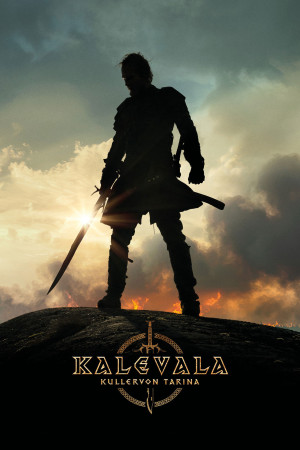
Phim Kalevala: Kullervon tarina (2026) Vietsub, Thuyết Minh HD
Tên khác: Son of Revenge – The Story of Kalevala
Xem phim Kalevala: Kullervon tarina có phụ đề tiếng việt trên www.xemphim1.top.
Bạn cũng có thể tải xuống miễn phí, đừng quên xem phát
trực tuyến với nhiều chất lượng khác nhau 720P 360P 240P 480P (nếu có) tùy theo đường truyền
của bạn để tiết kiệm dung lượng internet.
Status: completed
Năm phát hành: 2026
Thời lượng: 143 Phút
Quốc gia:
Phần Lan
Định dạng: Phim lẻ
Số tập: 1
Đạo diễn:
Antti J. Jokinen
Diễn viên:
Elias Salonen, Eero Aho, Ilkka Koivula, Ronja Kuoppamäki, Olli Rahkonen, Krista Kosonen, Johannes Holopainen, Janne Hyytiäinen, Seela Sella, Jesse Gyllenbögel
Chất lượng:
HD Vietsub
Tóm Tắt Nội Dung Phim Kalevala: Kullervon tarina 2026
In the 12th century, Karelia was a jagged edge of land where frozen lakes stretched to the horizon and birch forests ran so deep the sun barely touched the forest floor, a place where the only history that mattered was sung in the old runos of the Kalevala. Two brothers, Kalervo and Untamo, once shared a single hearth along the Vuoksi River, their fishing nets tangling in the same silver salmon runs, their voices blending in the same harvest songs. But pride is a slower poison than any bitter berry, and a petty dispute over a single catch of salmon, then a boundary marker for a tar-burning glade, turned their kinship to ash. Untamo, whose temper ran hotter than a forge fire, gathered his warband under a moonless sky, and by dawn, Kalervo’s entire village lay smoldering. Every last soul was cut down: the blacksmith slumped over his anvil, children still clutching birch bark dolls, elders mid-verse in the old runos. The only survivor was Kalervo’s infant son, Kullervo, found clutching his dead mother’s wool shawl in a drift of snow, his mouth silent even as the smoke stung his eyes.
Untamo did not kill him. Some say his wife pleaded for the boy’s life, warning that shedding a babe’s blood would bring the wrath of Tapio, the forest god, down on their heads. Others say Untamo saw the set of the boy’s jaw even then, and wondered if he might one day be useful. Either way, he took Kullervo into his own hall, but never called him son. The villagers called him the wolf cub, and treated him as such: he slept in the goat pen, ate scraps from the dogs’ bowls, was beaten if he so much as spoke out of turn. Yet Kullervo grew faster and stronger than any child in the village. By ten winters, he could lift a full ox yoke over his head; by twelve, he snapped iron chains as easily as dried twine. He had no laugh in him, no urge to play with the other children. Instead, he’d stare at the northern lights dancing overhead, humming tunes no one recognized, his hands always restless, always reaching for something to break or build.
The villagers feared him. They gave him impossible tasks to break his spirit: tend the cattle, and he’d forget to latch the gate, letting wolves slaughter half the herd. Bake the winter bread, and he’d fall asleep by the hearth, burning the entire grain store to cinders. Untamo whipped him until the blood ran, but the blows only darkened Kullervo’s eyes. They tried to drown him in the lake, but he walked out of the water up to his waist, his clothes heavy but his breath steady. They slipped poison into his porridge, but he spat it out the moment it touched his tongue, and the hound that ate the leftover scraps died shivering in the snow. After that, no one dared lay a hand on him, but they whispered among themselves that the village would never be safe as long as he lived. They begged Untamo to cast him out, to kill him, to do anything to be rid of the boy who carried a massacre in his blood.
Kullervo didn’t know why he was hated. He asked the blind runo singers who came to the hall during feast days, but they clenched their mouths shut, terrified of Untamo’s wrath. He wandered the deep forests for days at a time, talking to the bears and the ravens, asking what he was meant for, why his hands ached to hold a sword, what purpose there was to a life spent breaking things no one asked him to fix. He learned to forge iron at the village smithy when the smith was drunk, hammering out a blade so sharp it could cut a falling snowflake in two, but he kept it hidden under a pile of furs, unsure who to turn it against. He spent his entire youth searching for a reason to exist, a tether to a past no one would name to his face.
The truth came to him on a midwinter night, carried by an old woman with frostbitten fingers who’d been hiding in the marshlands since the massacre. She slipped into the smithy while Kullervo was sharpening his blade, and told him everything: the sound of Untamo’s men kicking in the steading doors, the way his father Kalervo fell defending the threshold, the names of every villager who’d died that night, the fact that he was the last of the Kalervo line, the only one left to carry their memory. She told him Untamo had ordered the killing, had laughed as the hall burned. When she finished, Kullervo’s hands stopped shaking. The restless ache in his bones was gone. His fate was clear, written in the same runos that had sung of his father’s life.
The path of revenge was not a rash one. Kullervo spent three more moons training with his blade, learning to move silent as falling snow, to track a man through a frozen forest. When he finally returned to Untamo’s hall, it was during the height of the midwinter feast, the villagers drunk on mead, the fire roaring so loud no one heard the door creak open. He walked straight to the high table where Untamo sat, his beard stained with wine, his belly soft from years of feasting. Kullervo didn’t shout. He didn’t need to. He told Untamo exactly who he was, listed every life lost in the massacre, every scar on his own back from Untamo’s whips, every cold night he’d spent in the goat pen. He forced Untamo to his knees, made him speak the names of the dead, made the entire hall listen as the man who’d called himself king of the village confessed to every sin, every murder, every lie.
When Untamo’s voice finally gave out, Kullervo didn’t let him die quickly. He made him watch as he burned the hall to the ground, the same way Untamo had burned Kalervo’s village decades before, the flames lighting up the snow for miles around. This is the story of Kullervon tarina, one of the darkest, most sorrowful runos in the entire Kalevala: the tale of a boy raised by the man who killed his family, who spent his life searching for a purpose, only to find it in the cold weight of a blade, and the reckoning of old blood.
![Cuộc Chiến Đẫm Máu (VANish) [2015]](https://cdn.xemphim1.top/storage/images/cuoc-chien-dam-mau/cuoc-chien-dam-mau-thumb.jpg "Cuộc Chiến Đẫm Máu (VANish) [2015]")
![Ngày thứ sáu (The 6th Day) [2000]](https://cdn.xemphim1.top/storage/images/ngay-thu-sau/ngay-thu-sau-thumb.jpg "Ngày thứ sáu (The 6th Day) [2000]")
![Sa Hải Chúc Long (Guardian of the Palace) [2020]](https://cdn.xemphim1.top/storage/images/sa-hai-chuc-long/sa-hai-chuc-long-thumb.jpg "Sa Hải Chúc Long (Guardian of the Palace) [2020]")
![Tội nhân vô định (Nowhere Man) [2019]](https://cdn.xemphim1.top/storage/images/toi-nhan-vo-dinh/toi-nhan-vo-dinh-7427.jpg "Tội nhân vô định (Nowhere Man) [2019]")
![Kẻ Thắng Cuộc (Final Target) [2009]](https://cdn.xemphim1.top/storage/images/ke-thang-cuoc/y1Skk3f8UpID2Bn4ZPLCX5uW1cD.jpg "Kẻ Thắng Cuộc (Final Target) [2009]")
![Những Cao Bồi Liều Mạng (The Desperate Riders) [2022]](https://cdn.xemphim1.top/storage/images/nhung-cao-boi-lieu-mang/7pYYGm1dWZGkbJuhcuaHD6nE6k7.jpg "Những Cao Bồi Liều Mạng (The Desperate Riders) [2022]")
![Không Chùn Bước (Never Back Down) [2008]](https://cdn.xemphim1.top/storage/images/khong-chun-buoc/unnamed(7).jpg "Không Chùn Bước (Never Back Down) [2008]")
![The Italian Job (The Italian Job) [1969]](https://cdn.xemphim1.top/storage/images/the-italian-job/the-italian-job-thumb.jpg "The Italian Job (The Italian Job) [1969]")
![DROP: Giang hồ học đường (Drop) [2009]](https://cdn.xemphim1.top/storage/images/drop-giang-ho-hoc-duong/drop-giang-ho-hoc-duong-thumb.jpg "DROP: Giang hồ học đường (Drop) [2009]")
![Huyền thoại của tương lai (Phần 2) (DC's Legends of Tomorrow (Season 2)) [2016]](https://cdn.xemphim1.top/storage/images/huyen-thoai-cua-tuong-lai-phan-2/huyen-thoai-cua-tuong-lai-phan-2-thumb.jpg "Huyền thoại của tương lai (Phần 2) (DC's Legends of Tomorrow (Season 2)) [2016]")