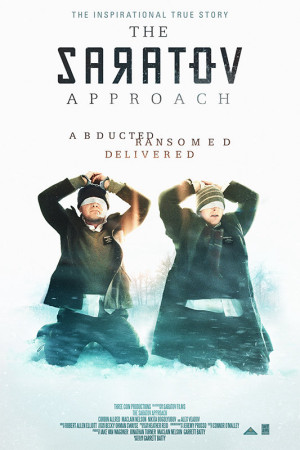
Phim The Saratov Approach (2013) Vietsub, Thuyết Minh HD
Tên khác: The Saratov Approach
Xem phim The Saratov Approach có phụ đề tiếng việt trên www.xemphim1.top.
Bạn cũng có thể tải xuống miễn phí, đừng quên xem phát
trực tuyến với nhiều chất lượng khác nhau 720P 360P 240P 480P (nếu có) tùy theo đường truyền
của bạn để tiết kiệm dung lượng internet.
Status: completed
Năm phát hành: 2013
Thời lượng: 107 Phút
Quốc gia:
Âu Mỹ, Ukraina
Định dạng: Phim lẻ
Số tập: 1
Đạo diễn:
Garrett Batty
Diễn viên:
Corbin Allred, Maclain Nelson, Nikita Bogolyubov, Alex Veadov
Chất lượng:
HD Vietsub
Tóm Tắt Nội Dung Phim The Saratov Approach 2013
The Saratov Approach thrusts viewers into the harrowing true account of two American Mormon missionaries—Elders Travis Tuttle and Andrew Propst—whose faith and endurance are tested during a terrifying week-long abduction in Russia’s isolated Saratov region. The film meticulously chronicles their 1998 ordeal, plunging audiences into the claustrophobic tension of captivity as verbal threats escalate into physical aggression. Anchored by raw performances, the narrative strips away sensationalism to expose the visceral fear and psychological warfare inflicted by their captors.
Against the bleak backdrop of post-Soviet Russia, where lawlessness festered in remote enclaves, the story underscores their vulnerability as foreigners targeted for ransom. Chains, blindfolds, and starvation become grim realities, yet the missionaries’ quiet defiance—rooted in spiritual resilience—drives the heart of their struggle. The Saratov Approach refuses to shy from brutality but balances its unflinching violence with moments of fragile humanity, illuminating how trust fractures under duress and flickers back in unexpected solidarity.
More than a survival thriller, it dissects the aftermath of trauma—for both victims and perpetrators—without tidy resolutions. The tension lies not in whether they’ll escape but how their ordeal reshapes their convictions. This grounded retelling avoids hero worship, instead framing their endurance as a fractured mosaic of doubt, prayer, and sheer will.
![Magic Maker: Isekai Mahou no Tsukurikata (Magic Maker: How to Create Magic in Another World) [2025]](https://cdn.xemphim1.top/storage/images/magic-maker-isekai-mahou-no-tsukurikata/magic-maker-isekai-mahou-no-tsukurikata.jpg "Magic Maker: Isekai Mahou no Tsukurikata (Magic Maker: How to Create Magic in Another World) [2025]")
![Chốt Chặn Cuối Cùng (The Last Stand) [2013]](https://cdn.xemphim1.top/storage/images/chot-chan-cuoi-cung/chot-chan-cuoi-cung-thumb.jpg "Chốt Chặn Cuối Cùng (The Last Stand) [2013]")
![WU (WU) [2026]](https://cdn.xemphim1.top/storage/images/wu/wu-thumb.jpg "WU (WU) [2026]")
![Chim Sẻ (The Sparrow) [2008]](https://cdn.xemphim1.top/storage/images/chim-se/chim-se-thumb.jpg "Chim Sẻ (The Sparrow) [2008]")
![Post Mortem: Không ai chết ở Skarnes (Post Mortem: No One Dies in Skarnes) [2021]](https://cdn.xemphim1.top/storage/images/post-mortem-khong-ai-chet-o-skarnes/post-mortem-khong-ai-chet-o-skarnes-thumb.jpg "Post Mortem: Không ai chết ở Skarnes (Post Mortem: No One Dies in Skarnes) [2021]")
![Halo (Phần 2) (Halo Season 2) [2024]](https://cdn.xemphim1.top/storage/images/halo-phan-2/halo-phan-2-thumb.jpg "Halo (Phần 2) (Halo Season 2) [2024]")
![Giới Linh (JieLing) [2026]](https://cdn.xemphim1.top/storage/images/gioi-linh/gioi-linh-thumb.jpg "Giới Linh (JieLing) [2026]")
![Trigun Stargaze (Trigun: Stargaze) [2026]](https://cdn.xemphim1.top/storage/images/trigun-stargaze/trigun-stargaze.jpg "Trigun Stargaze (Trigun: Stargaze) [2026]")
![Cuộc chiến thế kỷ (Invasion U.S.A.) [1985]](https://cdn.xemphim1.top/storage/images/cuoc-chien-the-ky/cuoc-chien-the-ky-thumb.jpg "Cuộc chiến thế kỷ (Invasion U.S.A.) [1985]")
![Amina (Amina) [2021]](https://cdn.xemphim1.top/storage/images/amina/amina-thumb.jpg "Amina (Amina) [2021]")